Let's explore some cognitive scientists, educational researchers, and philosophers who argue their own visions of critical thinking based in diverse research traditions (e.g., Ennis, 1992; Facione, 1984; Halpern, 1993; Johnson, 1996; Lipman, 1988; McPeck, 1981; Paul, 1993; Perkins, Jay, & Tishman, 1993; Resnick, 1987).
References
•Perkins, D., Simmons, R. & Tishman, S. (1990). Teaching cognitive and metacognitive strategies. Journal of Structural Learning, 10(4), 285-303.
•Perkins, D., Jay, E., & Tishman, S. (1994). Assessing thinking: A framework for measuring critical thinking and problem solving at the college level. In A. Greenwood (Ed.), The national assessment of college student learning: Identification of the skills to be taught, learned, and assessed (pp. 65-112). Washington, DC: The US Government Printing Office.
•Tishman, S. (2005) From Edification to engagement: Learning designs in museums. College Art Association News, 30(5), 12-13, 41.
•Patterns of Thinking Project, Project Zero, supported by the John D. and Catherine T. MacArthur Foundation, http://www.pz.harvard.edu/Research/PatThk.htm.
Thursday, March 29, 2012

Tuesday, March 27, 2012
Do Learning Styles Matter?
Coffield, F, Moseley, D, Hall, E & Ecclestone, K 2004, Learning styles and pedagogy in post-16 learning: a systematic and critical review, LSRC reference, Learning & Skills Research Centre, London.
The above report documents work from a project funded by the Learning and Skills Development Agency (LSDA) to carry out an extensive review of research on post-16 learning styles, to evaluate the main models of learning styles, and to discuss the implications of learning styles for post-16 teaching and learning. The authors identified 71 different theories of learning styles, while criticizing many instruments used to identify an individual's learning style. Coffield and his colleagues chose 13 of the models they regarded as most for closer scrutiny.
The models were classified on a continuum from theorists believing in strong genetic influences and inherited traits of interaction of personality and cognition (styles should be worked with not changed) to middle ground, models that work with an interplay of self and experience (experience and personality), and the other end of the continuum including personal and environmental factors (student choice in environment). These are models that are constitutionally based, reflecting cognitive structure, stable personality types, flexibly stable learning preferences, and learning approaches, strategies, orientations and conceptions of learning:

The report presents the origins and terms of each of the 13 models, and the instrument that was used to assess the learning styles defined by the model. They reviewed claims made by authors of each of the models' authors, research on the model, and evidence of the relationship between the 'learning style' identified by the instrument and students' actual learning. Coffield et al reported that none of the 13 models they assessed had been validated by independent research. they concluded that the concept of learning cycle, the consistency of visual, auditory and kinesthetic preferences and the value of matching teaching and learning styles were all "highly questionable."(Coffield 2004)
The Dunn and Dunn Learning Styles Inventory (LSI)is widely used in United States elementary schools, and Kolb's (LSI) and Honey and Mumford's Learning Styles Questionnaire are widely used in the United Kingdom.
Falling under the classification of constituionally based (the stongest belief in genetic determination for learning style), the learning styles model of Dunn and Dunn, a VAK (Visual, Auditory, Kinesthetic) model, was assessed by the team. This model has widespread acceptance in the United States, and 177 articles have been published in peer-reviewed journals referring to this model. The conclusion of Coffield et al. was as follows:
David Kolb's model of learning styles, developed in the 1970's, was one of the most influential. Kolb was not satisfied with traditional teaching. When he experimented with teaching techniques, he observed student preferences for certain activities. His model defines a
'differential preference for learning, which changes slightly from situation to situation. At the same time, there is some long-term stability in learning style.' (Kolb 2000)
Kolb claims that the scored on the LSI are stable throughout a person's lifetime, a claim which has yet to be proved by longitudinal research. Kolb's publication, Experiential Learning: experience as the source of learning and development, in 1984, credited him with launching the modern learning styles movement. In 2000, a bibliography of research since 1971 on Kolb's LSI, containing 1004 entries, was produced by David Kolb and his wife Alice. The Dunn and Dunn website LSQ has a bibliography with 1140 entries. Articles about the Myers Briggs Type Indicator (MBTI) between 1985 and 1995 are estimated to number about 2000. (Coffield 2004)
Anthony Gregorc built his learning styles model on Kolb's, differing in not representing the learning cycle derived from experiential learning. He described learning style as the manner in which the learner orders the concrete and abstract perceptions of her or his environment. Gregorc defines four distinct learning styles: Concrete Sequential (CS), Abstract Random (AR), Abstract Sequential (AS), and Concrete Random (CR). Grogorc claims that each style is associated with specific learning dispositions. A former educator himself, Gregorc argues that understanding learning styles is especially important for teachers. Gregorx believed that a misalignment of their own styles and the teaching methods will negatively impact students. (Greogr 2002) Coffield's team assessment of another constitutionally based model, Gregorc's Style Delineator (GSD), a 10-item self-report questionnaire requiring ranking of descriptors to the self, was that the model was
"theoretically and psychometrically flawed ...not suitable for the assessment of individuals." (Coffield 2004)
Myers-Briggs Type Indicator was designed by by Katherine Cook Briggs and her daughter Isabel Myers. They began to apply Jung's theory of human personality to an assessment instrument in the 1940's. They published the first MBTI manuel in 1962, and then in 1985 and 1998. (Myers and McCaulley 1985, 1998) The MBTI is the most popular personality testing instrument in the US and the UK, as it uses the factors of extraversion, openness, agreeableness, conscientiousness. The 1998 version is a 93-item test which has a series of forced-choice questions.
The forced-choice format of the MBTI has been criticized as yielding 'negative intercorrelations that are difficult to interpret'. The research is inconclusive, according to Coffield and his team in 2004.
In 1999, David Kolb claimed that concrete experience and abstract conceptualism are reflections of right and left brain thinking. Kolb adopted the Piagetian concepts of accomodation and assimilation and called them prehension and transformation.
Mark K. Smith criqued Kolb’s model of learning styles in his article, “David A. Kolb on Experiential Learning”. Smith identifies six key issues regarding the model: 1) the model doesn’t adequately address the process of reflection; 2) extravagant claims about the four learning styles; 3) different cultural conditions and experiences not addressed; 4) the idea of stages/steps doesn’t necessarily match reality; 5) only weak empirical evidence; 6) the relationship between learning processes and knowledge is more simplified in Kolb's model. (Smith 2001)
Kolb's work was the theoretical base for the 4MAT system, 'teach around the learning cycle' is an eight-step instructional sequence created by McCarthy in 1990. (www.aboutlearning.com)

Some comments made by Coffield et al on learning styles:
This table matches the 13 learning style model against psychometric criteria:

One of the final report comments:
References
•Coffield, F, Moseley, D, Hall, E & Ecclestone, K 2004, Learning styles and pedagogy in post-16 learning: a systematic and critical review, LSRC reference, Learning & Skills Research Centre, London.
•Dunn, R., Dunn, K., & Price, G. E. (1984). Learning style inventory. Lawrence, KS, USA: Price Systems.
•Dunn, R, & Dunn, K (1978). Teaching students through their individual learning styles: A practical approach. Reston, VA: Reston Publishing Company.
•Willingham, Daniel. Willingham: No evidence exists for learning style theories. Retrieved on February 24, 2010, from http://voices.washingtonpost.com/answer-sheet/daniel-willingham/-my-guest-today-is.html
•Massa, L. J.; Mayer, R. E. (2006). "Testing the ATI hypothesis: Should multimedia instruction accommodate verbalizer-visualizer cognitive style?". Learning and Individual Differences 16: 321–336. doi:10.1016/j.lindif.2006.10.001.
•Glenn, David. Matching Teaching Style to Learning Style May Not Help Students. Retrieved on February 24, 2010, from http://chronicle.com/article/Matching-Teaching-Style-to/49497/
•Holden, Constance. Learning with Style. Retrieved on February 24, 2010, from http://www.sciencemag.org/content/vol327/issue5962/r-samples.dtl
•Smith, M. K. (2001). David A. Kolb on experiential learning. Retrieved October 17, 2008, from: http://www.infed.org/biblio/b-explrn.htm
•Gevins, A., Smith, M.E., McEvoy, L.K., & Ilan, A. (2003). EEG and ERP signals of working memory. International Society for Brain Electromagnetic Topography, November, Santa Fe, NM.
•Hargreaves, D., et al. (2005). About learning: Report of the Learning Working Group. Demos.
•Atherton J S (2011) Doceo; Learning styles don't matter [On-line: UK] retrieved 27 March 2012 from http://www.doceo.co.uk/heterodoxy/styles.htm
The above report documents work from a project funded by the Learning and Skills Development Agency (LSDA) to carry out an extensive review of research on post-16 learning styles, to evaluate the main models of learning styles, and to discuss the implications of learning styles for post-16 teaching and learning. The authors identified 71 different theories of learning styles, while criticizing many instruments used to identify an individual's learning style. Coffield and his colleagues chose 13 of the models they regarded as most for closer scrutiny.
The models were classified on a continuum from theorists believing in strong genetic influences and inherited traits of interaction of personality and cognition (styles should be worked with not changed) to middle ground, models that work with an interplay of self and experience (experience and personality), and the other end of the continuum including personal and environmental factors (student choice in environment). These are models that are constitutionally based, reflecting cognitive structure, stable personality types, flexibly stable learning preferences, and learning approaches, strategies, orientations and conceptions of learning:

The report presents the origins and terms of each of the 13 models, and the instrument that was used to assess the learning styles defined by the model. They reviewed claims made by authors of each of the models' authors, research on the model, and evidence of the relationship between the 'learning style' identified by the instrument and students' actual learning. Coffield et al reported that none of the 13 models they assessed had been validated by independent research. they concluded that the concept of learning cycle, the consistency of visual, auditory and kinesthetic preferences and the value of matching teaching and learning styles were all "highly questionable."(Coffield 2004)
The Dunn and Dunn Learning Styles Inventory (LSI)is widely used in United States elementary schools, and Kolb's (LSI) and Honey and Mumford's Learning Styles Questionnaire are widely used in the United Kingdom.
Falling under the classification of constituionally based (the stongest belief in genetic determination for learning style), the learning styles model of Dunn and Dunn, a VAK (Visual, Auditory, Kinesthetic) model, was assessed by the team. This model has widespread acceptance in the United States, and 177 articles have been published in peer-reviewed journals referring to this model. The conclusion of Coffield et al. was as follows:
Despite a large and evolving research programme, forceful claims made for impact are questionable because of limitations in many of the supporting studies and the lack of independent research on the model
David Kolb's model of learning styles, developed in the 1970's, was one of the most influential. Kolb was not satisfied with traditional teaching. When he experimented with teaching techniques, he observed student preferences for certain activities. His model defines a
'differential preference for learning, which changes slightly from situation to situation. At the same time, there is some long-term stability in learning style.' (Kolb 2000)
Kolb claims that the scored on the LSI are stable throughout a person's lifetime, a claim which has yet to be proved by longitudinal research. Kolb's publication, Experiential Learning: experience as the source of learning and development, in 1984, credited him with launching the modern learning styles movement. In 2000, a bibliography of research since 1971 on Kolb's LSI, containing 1004 entries, was produced by David Kolb and his wife Alice. The Dunn and Dunn website LSQ has a bibliography with 1140 entries. Articles about the Myers Briggs Type Indicator (MBTI) between 1985 and 1995 are estimated to number about 2000. (Coffield 2004)
Anthony Gregorc built his learning styles model on Kolb's, differing in not representing the learning cycle derived from experiential learning. He described learning style as the manner in which the learner orders the concrete and abstract perceptions of her or his environment. Gregorc defines four distinct learning styles: Concrete Sequential (CS), Abstract Random (AR), Abstract Sequential (AS), and Concrete Random (CR). Grogorc claims that each style is associated with specific learning dispositions. A former educator himself, Gregorc argues that understanding learning styles is especially important for teachers. Gregorx believed that a misalignment of their own styles and the teaching methods will negatively impact students. (Greogr 2002) Coffield's team assessment of another constitutionally based model, Gregorc's Style Delineator (GSD), a 10-item self-report questionnaire requiring ranking of descriptors to the self, was that the model was
"theoretically and psychometrically flawed ...not suitable for the assessment of individuals." (Coffield 2004)
Myers-Briggs Type Indicator was designed by by Katherine Cook Briggs and her daughter Isabel Myers. They began to apply Jung's theory of human personality to an assessment instrument in the 1940's. They published the first MBTI manuel in 1962, and then in 1985 and 1998. (Myers and McCaulley 1985, 1998) The MBTI is the most popular personality testing instrument in the US and the UK, as it uses the factors of extraversion, openness, agreeableness, conscientiousness. The 1998 version is a 93-item test which has a series of forced-choice questions.
The face validity of the MBTI is generally accepted
as fairly sound by researchers from personality theory
backgrounds, with the caveat (not accepted by MBTI
researchers, see quote from Quenck 2003 above) that
the omission of neuroticism is a theoretical weakness
(Eysenck and Eysenck 1985).(Coffield 2004, p 133)
The forced-choice format of the MBTI has been criticized as yielding 'negative intercorrelations that are difficult to interpret'. The research is inconclusive, according to Coffield and his team in 2004.
In 1999, David Kolb claimed that concrete experience and abstract conceptualism are reflections of right and left brain thinking. Kolb adopted the Piagetian concepts of accomodation and assimilation and called them prehension and transformation.
Mark K. Smith criqued Kolb’s model of learning styles in his article, “David A. Kolb on Experiential Learning”. Smith identifies six key issues regarding the model: 1) the model doesn’t adequately address the process of reflection; 2) extravagant claims about the four learning styles; 3) different cultural conditions and experiences not addressed; 4) the idea of stages/steps doesn’t necessarily match reality; 5) only weak empirical evidence; 6) the relationship between learning processes and knowledge is more simplified in Kolb's model. (Smith 2001)
Kolb's work was the theoretical base for the 4MAT system, 'teach around the learning cycle' is an eight-step instructional sequence created by McCarthy in 1990. (www.aboutlearning.com)

Some comments made by Coffield et al on learning styles:
For some learning style developers, there is no
special category of students with learning difficulties,
only teachers who have not learned that their
teaching style is appropriate for perhaps a quarter
of their students and seriously inappropriate for the
remainder. Those teachers who have incorporated
the Dunn and Dunn model into their practice speak
movingly at conferences of how this re-categorisation
of the problem (where students’ failure to learn
is reformulated as teachers’ failure to teach
appropriately) has transformed their attitude to
students they previously dismissed as stupid, slow,
unmotivated, lazy or ineducable. This is not an
inconsiderable achievement.
The theorists warn of the dangers of labelling,
whereby teachers come to view their students as
being a certain type of learner, but despite this warning,
many practitioners who use their instruments think
in stereotypes and treat, for instance, vocational
students as if they were all non-reflective activists.
The literature is full of examples of practitioners
and some theorists themselves referring to ‘globals
and analytics’ (Brunner and Majewski 1990, 22),
or ‘Quadrant Four learners’ (Kelley 1990, 38),
or ‘integrated hemisphere thinkers’ (Toth and Farmer
2000, 6). In a similar vein, Rita Dunn writes as
follows: ‘It is fascinating that analytic and global
youngsters appear to have different environmental
and physiological needs’ (1990c, 226). Similarly,
students begin to label themselves; for example,
at a conference attended by one of the reviewers, an
able student reflected – perhaps somewhat ironically –
on using the Dunn and Dunn Productivity Environmental
Preference Survey (PEPS): ‘I learned that I was a low
auditory, kinaesthetic learner. So there’s no point
in me reading a book or listening to anyone for more
than a few minutes’. The temptation to classify,
label and stereotype is clearly difficult to resist.
Entwistle has repeatedly warned against describing
students as ‘deep’ or ‘surface’ learners, but these
warnings tend to be ignored when instruments move
into mainstream use.
This table matches the 13 learning style model against psychometric criteria:

Table 44 presents our psychometric findings
diagrammatically. It can be seen that only Allinson
and Hayes met all four of the minimal criteria and
that Riding and Sternberg failed to meet any of them.
Jackson’s model has still to be evaluated. In more
detail, the 13 instruments can be grouped as follows.
Those meeting none of the four criteria: Jackson;
Riding; Sternberg.
Those meeting one criterion: Dunn and Dunn; Gregorc;
Honey and Mumford; Kolb.
Those meeting two criteria: Entwistle; Herrmann;
Myers-Briggs.
Those meeting three criteria: Apter, Vermunt.
Those meeting all four criteria: Allinson and Hayes.
One of the final report comments:
This report has sought to sift the wheat from the chaff
among the leading models and inventories of learning
styles and among their implications for pedagogy:
we have based our conclusions on the evidence,
on reasoned argument and on healthy scepticism.
For 16 months, we immersed ourselves in the world
of learning styles and learned to respect the
enthusiasm and the dedication of those theorists,
test developers and practitioners who are working
to improve the quality of teaching and learning.
We ourselves have been reminded yet again how
complex and varied that simple-sounding task is and
we have learned that we are still some considerable way
from an overarching and agreed theory of pedagogy.
In the meantime, we agree with Curry’s summation
(1990, 54) of the state of play of research into learning
styles: ‘researchers and users alike will continue
groping like the five blind men in the fable about the
elephant, each with a part of the whole but none with
full understanding’.
References
•Coffield, F, Moseley, D, Hall, E & Ecclestone, K 2004, Learning styles and pedagogy in post-16 learning: a systematic and critical review, LSRC reference, Learning & Skills Research Centre, London.
•Dunn, R., Dunn, K., & Price, G. E. (1984). Learning style inventory. Lawrence, KS, USA: Price Systems.
•Dunn, R, & Dunn, K (1978). Teaching students through their individual learning styles: A practical approach. Reston, VA: Reston Publishing Company.
•Willingham, Daniel. Willingham: No evidence exists for learning style theories. Retrieved on February 24, 2010, from http://voices.washingtonpost.com/answer-sheet/daniel-willingham/-my-guest-today-is.html
•Massa, L. J.; Mayer, R. E. (2006). "Testing the ATI hypothesis: Should multimedia instruction accommodate verbalizer-visualizer cognitive style?". Learning and Individual Differences 16: 321–336. doi:10.1016/j.lindif.2006.10.001.
•Glenn, David. Matching Teaching Style to Learning Style May Not Help Students. Retrieved on February 24, 2010, from http://chronicle.com/article/Matching-Teaching-Style-to/49497/
•Holden, Constance. Learning with Style. Retrieved on February 24, 2010, from http://www.sciencemag.org/content/vol327/issue5962/r-samples.dtl
•Smith, M. K. (2001). David A. Kolb on experiential learning. Retrieved October 17, 2008, from: http://www.infed.org/biblio/b-explrn.htm
•Gevins, A., Smith, M.E., McEvoy, L.K., & Ilan, A. (2003). EEG and ERP signals of working memory. International Society for Brain Electromagnetic Topography, November, Santa Fe, NM.
•Hargreaves, D., et al. (2005). About learning: Report of the Learning Working Group. Demos.
•Atherton J S (2011) Doceo; Learning styles don't matter [On-line: UK] retrieved 27 March 2012 from http://www.doceo.co.uk/heterodoxy/styles.htm
Monday, March 26, 2012
Critical Thinking, Learning Dispositions
Critical Thinking, Learning Dispositions
History of debate about thinking goes back to Plato in ancient Greece, who showed us logic as a process of dialogical thinking, as he modeled it through his teacher, Socrates. Aristotle refine the logical analysis that was not changed until the twentieth century. In Western culture, philosophers have relied on logic to reason the soundness of an argument. In the twentieth century, Bertrand Russell, John Dewey, Edward Glaser, Max Black, Israel Schefler, R.S. Peters, Gilbert Ryle, and John Passmore have argued refinements to critical thinking theory. (Thayer-Bacon, 2000)
 Plato
Rene´ Descartes mind-body distinction is his most famous theses. His thesis that the mind and the body are completely distinct from each other is now called "mind-body dualism". He argues that the nature of the thinking, non-extended thing, the mind, a non-physical substance, is different from the extended non-thinking thing, the body. He further states that because of this it is possible for one to exist without the other. In Cartesian dualism, the immaterial mind and the material body are considered ontologically different substances. (Descartes, 1641)
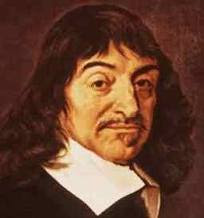 Descartes was confronted by Pierre Gassendi, the author of the Fifth Objections, and Descartes’ correspondent, Princess Elizabeth of Bohemia about the distinction of mind and body being completely separate or opposite things. Descartes argues that he is a
“thing that doubts, understands, affirms, denies, is willing, is unwilling, and also imagines and has sensory perceptions” (Descartes, 1641).
He surmises that therefore a mind cannot be shaped or be put into motion, and likewise a body cannot sense anything around it. Therefore, the mind can exist separate from its body, and as this distinct substance, its essence is thought.
Gilbert Ryles (1900-1976) was a philosopher who taught at Oxford, writing a classical critique of the idea that body and mind are separate, in The Concept of Mind (1949). Ryle argued against Descartes imagining of the 'ghost' inside of us that works our clearly mechanical body. This theory of the separability of mind and body is described by Ryle as "the dogma of the ghost in the machine." He argues that if mind and body were truly separate, every human action would result from the two causes of the physical brain and the mental state. He states that knowing how to skillfully perform an act is not only possible because of being able to reason practically, but also a matter of being able to put this practical reasoning into the action. Ryle says that mental processes are just intelligent acts.
"is not to be in a particular state, or to undergo a particular change; it is to be bound or liable to be in a particular state, or undergo a particular change, when a particular condition is realized" (Ryle, 1949).
 Ryle explains that a person can be cigarette smoker, and this means that s/he has a disposition to smoke, even if s/he is not smoking at a particular point in time.
Robert Ennis wrote "A Concept of Critical Thinking" for the Harvard Educational Review in 1962, in which he discussed and explored key themes in critical thinking including skills and dispositions, rationality and absolutism, and power and knowing. (Thayer-Bacon, 2000) Ennis's original definition of critical thinking in terms of skills was
Harvey Siegel, Israel Scheffler and Richard Paul argue Ennis's assumptions:
 Harvey Siegel
Stephen Norris further specifies that critical thinking dispositions give one the tendency to think a certain way under certain circumstances (Norris, 1994).
"...individuals must either have formed habits to use certain abilities, or overtly think and chose to use the abilities they possess. A person with an ability to think critically under certain conditions will do it, only if so disposed" (Norris, 1994).
Gavriel Salomon agreed with Norris, stating that thinking dispositions as not just a "summary label for a cluster in interrelated and relatively stable behaviors". Dispositions have a causal function and an explanatory status. Dispositions are seen by Salomon as a cluster of preferences, attitudes, and intentions, with capabilities which allow the preferences to be realized in certain ways (Salomon, 1994). Peter and Noreen Facione, who developed the Thinking Dispositions Inventory, define a thinking disposition as a constellation of attitudes, intellectual virtues, and habits of mind (Facione, Sanchez, Facione 1994). Norris discusses the difference in disposition and ability, as one can have the skill or ability to do something, but not be inclined, or disposed to do so. Therefore, critical thinkers who reason well must have the abilities and the dispositions.
Researchers are coming to recognize that content and skills is not as useful if learners do develop the capacity to look at the world critically. Ennis argues a critical person should seek reasons be well informed, but also s/he should have a tendency toward these things. (Ennis 1987, 1996). Critical thinking now comes to mean not only the capacity or skills to seek the truth and evidence by reason, but the disposition to apply these skills.
David Perkins, Eileen Jay and Shari Tishman have put forth what they call a "triadic conception of thinking dispositions," which includes the concept of ability. They delve into the concept of dispositions from a psychological viewpoint; they propose there are three psychological components which must be present in order to run dispositional behavior. These three elements are: (1) sensitivity - the perception of the appropriateness of a particular behavior; (2) inclination - the felt impetus toward a behavior; and (3) ability - the basic capacity to follow through with the behavior (Perkins, Jay & Tishman, 1993). For example, someone who is genuinely disposed to seek balanced reasons in an argument is (1) sensitive to occasions to do so (for instance while reading a newspaper editorial); (2) feels moved, or inclined, to do so; and (3) has the basic ability to follow through with the behavior, for instance, he or she can actually identify pro and con reasons for both sides of an argument.
 David Perkins
Ennis still maintains an academic website devoted to critical thinking. http://faculty.ed.uiuc.edu/rhennis/ When I accessed the site on March 26, 2012, there was a note that the website was last updated on September 6, 2011. The critical thinking that appears on the website is:
Assuming that critical thinking is reasonable reflective thinking focused on deciding what to believe or do, a critical thinker:
David Perkins and Robert Ennis are both currently listed as being on the faculty of the National Center on Teaching Thinking (NCTT). (http://www.nctt.net/ncttfaculty.php)
More to come about critical thinking and learning dispositions-- let's explore some cognitive scientists, educational researchers, and philosophers who argue their own visions of critical thinking based in diverse research traditions (e.g., Ennis, 1992; Facione, 1984; Halpern, 1993; Johnson, 1996; Lipman, 1988; McPeck, 1981; Paul, 1993; Perkins, Jay, & Tishman, 1993; Resnick, 1987).
References
•Burbles, N., Berk, R., Critical Thinking and Critical Pedagogy: Relations, Differences, and Limits, Published in Critical Theories in Education, Thomas S. Popkewitz and Lynn Fendler, eds. (NY: Routledge, 1999).
•Descartes, R. (1641) Meditations on First Philosophy, in The Philosophical Writings of René Descartes, trans. by J. Cottingham, R. Stoothoff and D. Murdoch, Cambridge: Cambridge University Press, 1984, vol. 2, pp. 1-62.
•Gilbert Ryle, The Concept of Mind (Chicago: The University of Chicago Press, 1949).
•Ennis, R.H. (1962). A concept of critical thinking. Harvard Educational Review, 32, 81-111.
•Ennis, Robert H. (1980). "A conception of rational thinking." Philosophy of Education 1979 , Jerrold R. Coombs, ed. (Bloomington, IL: Philosophy of Education Society), 3-30.
•Ennis, Robert H. (1984). "Problems in testing informal logic/critical thinking/reasoning ability." Informal Logic, vol. 6 no. 1: 3-9.
•Ennis, Robert H. (1987). "A taxonomy of critical thinking dispositions and abilities." Teaching Thinking Skills: Theory and Practice, Joan Boykoff Brown and Robert J. Sternberg, eds. (New York: W.H. Freeman, 9-26.
•Ennis, Robert H. (1996). Critical Thinking (Upper Saddle River, NJ: Prentice Hall).
•Ennis, Robert H. academic website, accessed on March 26, 2012, http://faculty.ed.uiuc.edu/rhennis/(a note that the website was last updated on September 6, 2011)
•Facione, P., Giancarlo (Sanchez), c., Facione, N., & Gainen (Kurfiss), 1. (1995). The disposition toward critical thinking, Journal of General Education, 44 (l), 1-25.
•Facione, P., The Disposition Toward Critical Thinking: Its Character, Measurement, and Relationship to Critical Thinking Skill, lnformal Logic Vol. 20, No.1 (2000): pp.61-84.
•Facione, P. A., Sanchez, C. A., Facione, N. C. & Gainen, J., The
Disposition toward critical thinking. Journal of General Education, Volume 44, Number(1). 1-25, 1995.
•Kaplan, Laura Duhan (1991/1994). "Teaching intellectual autonomy: The failure of the critical thinking movement." Educational Theory, vol. 41 no. 4: 361-370. Republished in Re-Thinking Reason: New Perspectives in Critical Thinking, Kerry S. Walters, ed. (Albany: SUNY Press).
•Norris, Stephen P., Testing for the Disposition to Think Critically, Informal Logic: Reasoning and Argumentation in Theory and Practice, Vol 14, No 2 (1992). ISSN: 0824-2577
http://ojs.uwindsor.ca/ojs/leddy/index.php/informal_logic/article/view/2538
•Paul, R. W., (1995). Critical thinking: How to prepare students for a rapidly changing world. Santa Rosa, CA: Foundation for Critical Thinking.
•Perkins, D., Jay, E., & Tishman, S. (1994). Assessing thinking: A framework for measuring critical thinking and problem solving at the college level. In A. Greenwood (Ed.), The national assessment of college student learning: Identification of the skills to be taught, learned, and assessed (pp. 65-112). Washington, DC: The US Government Printing Office.
•Perkins, D., Jay, E., & Tishman, S. (1993). Teaching thinking: From ontology to education. Educational Psychologist, 28 (1), 67-85.
•Perkins, D., Jay, E. & Tishman, S. (Guest editors, Special Issue of Educational Psychologist). (1993). New Directions in the teaching of thinking, 28 (1), 1-6.
•Salomon, G. (1994). To Be or Not To Be (Mindful)? Presented to the American Educational Research Association Meetings, New Orleans, LA.
Siegel, H. editor, Scheffler, I., Reason and Education, Essays in Honor of Israel Scheffler, Kluwer Academic Publishers, Dordrecht, The Netherlands, 1997.
•Siegel, H. (1988), Rationality and epistemic dependence.Educational Philosophy and Theory, 20: 1–6. doi: 10.1111/j.1469-5812.1988.tb00487.x (abstract: http://onlinelibrary.wiley.com/doi/10.1111/j.1469-5812.1988.tb00487.x/abstract)
•SIEGEL, H. (2008), Autonomy, Critical Thinking and the Wittgensteinian Legacy: Reflections on Christopher Winch, Education, Autonomy and Critical Thinking. Journal of Philosophy of Education, 42: 165–184. doi: 10.1111/j.1467-9752.2008.00611.x (abstract: http://onlinelibrary.wiley.com/doi/10.1111/j.1467-9752.2008.00611.x/abstract)
Siegel, H. (1999), WHAT (GOOD) ARE THINKING DISPOSITIONS?. Educational Theory, 49: 207–221. doi: 10.1111/j.1741-5446.1999.00207.x
•Thayer-Bacon, B., Transforming Critical Thinking: Thinking Constructively, Teachers College Press, New York, 2000.
History of debate about thinking goes back to Plato in ancient Greece, who showed us logic as a process of dialogical thinking, as he modeled it through his teacher, Socrates. Aristotle refine the logical analysis that was not changed until the twentieth century. In Western culture, philosophers have relied on logic to reason the soundness of an argument. In the twentieth century, Bertrand Russell, John Dewey, Edward Glaser, Max Black, Israel Schefler, R.S. Peters, Gilbert Ryle, and John Passmore have argued refinements to critical thinking theory. (Thayer-Bacon, 2000)

Rene´ Descartes mind-body distinction is his most famous theses. His thesis that the mind and the body are completely distinct from each other is now called "mind-body dualism". He argues that the nature of the thinking, non-extended thing, the mind, a non-physical substance, is different from the extended non-thinking thing, the body. He further states that because of this it is possible for one to exist without the other. In Cartesian dualism, the immaterial mind and the material body are considered ontologically different substances. (Descartes, 1641)

“thing that doubts, understands, affirms, denies, is willing, is unwilling, and also imagines and has sensory perceptions” (Descartes, 1641).
He surmises that therefore a mind cannot be shaped or be put into motion, and likewise a body cannot sense anything around it. Therefore, the mind can exist separate from its body, and as this distinct substance, its essence is thought.
Gilbert Ryles (1900-1976) was a philosopher who taught at Oxford, writing a classical critique of the idea that body and mind are separate, in The Concept of Mind (1949). Ryle argued against Descartes imagining of the 'ghost' inside of us that works our clearly mechanical body. This theory of the separability of mind and body is described by Ryle as "the dogma of the ghost in the machine." He argues that if mind and body were truly separate, every human action would result from the two causes of the physical brain and the mental state. He states that knowing how to skillfully perform an act is not only possible because of being able to reason practically, but also a matter of being able to put this practical reasoning into the action. Ryle says that mental processes are just intelligent acts.
"is not to be in a particular state, or to undergo a particular change; it is to be bound or liable to be in a particular state, or undergo a particular change, when a particular condition is realized" (Ryle, 1949).

Robert Ennis wrote "A Concept of Critical Thinking" for the Harvard Educational Review in 1962, in which he discussed and explored key themes in critical thinking including skills and dispositions, rationality and absolutism, and power and knowing. (Thayer-Bacon, 2000) Ennis's original definition of critical thinking in terms of skills was
the correct assessing of statements.(Ennis, p. 83, 1962) He discussed issues of evaluating critical thinking skills. His list of critical thinking proficiencies was "the most detailed, complex, and useful to be developed, as credited by other philosophers." (Thayer-Bacon, 2000) He designed critical thinking tests, and is the coauthor of the Cornell Critical Thinking Tests (Ennis & Millman, 1982), and the "Problems in Testing Informal Logic/Critical Thinking/Reasoning Ability", (Ennis, 1984) Ennis argues that a critical person not only is well informed and seeks reason, but has a tendency to do so. (Ennis 1987, 1996)
Harvey Siegel, Israel Scheffler and Richard Paul argue Ennis's assumptions:
Siegel criticizes Ennis somewhat for seeing dispositions simply as what animates the skills of critical thinking, because this fails to distinguish sufficiently the critical thinker from critical thinking. For Siegel, a cluster of dispositions (the "critical spirit") is more like a deep-seated character trait, something like Scheffler’s notion of "a love of truth and a contempt of lying" (Siegel 1988; Scheffler 1991). It is part of critical thinking itself. Paul also stresses this distinction between skills and dispositions in his distinction between "weak-sense" and "strong-sense" critical thinking. For Paul, the "weak-sense" means that one has learned the skills and can demonstrate them when asked to do so; the "strong-sense" means that one has incorporated these skills into a way of living in which one’s own assumptions are re-examined and questioned as well. According to Paul, a critical thinker in the "strong sense" has a passionate drive for "clarity, accuracy, and fairmindedness" (Paul 1983, 23; see also Paul 1994).(Burbles & Berk 1999) (http://faculty.ed.uiuc.edu/burbules/papers/critical.html)

Stephen Norris further specifies that critical thinking dispositions give one the tendency to think a certain way under certain circumstances (Norris, 1994).
"...individuals must either have formed habits to use certain abilities, or overtly think and chose to use the abilities they possess. A person with an ability to think critically under certain conditions will do it, only if so disposed" (Norris, 1994).
Gavriel Salomon agreed with Norris, stating that thinking dispositions as not just a "summary label for a cluster in interrelated and relatively stable behaviors". Dispositions have a causal function and an explanatory status. Dispositions are seen by Salomon as a cluster of preferences, attitudes, and intentions, with capabilities which allow the preferences to be realized in certain ways (Salomon, 1994). Peter and Noreen Facione, who developed the Thinking Dispositions Inventory, define a thinking disposition as a constellation of attitudes, intellectual virtues, and habits of mind (Facione, Sanchez, Facione 1994). Norris discusses the difference in disposition and ability, as one can have the skill or ability to do something, but not be inclined, or disposed to do so. Therefore, critical thinkers who reason well must have the abilities and the dispositions.
Researchers are coming to recognize that content and skills is not as useful if learners do develop the capacity to look at the world critically. Ennis argues a critical person should seek reasons be well informed, but also s/he should have a tendency toward these things. (Ennis 1987, 1996). Critical thinking now comes to mean not only the capacity or skills to seek the truth and evidence by reason, but the disposition to apply these skills.
David Perkins, Eileen Jay and Shari Tishman have put forth what they call a "triadic conception of thinking dispositions," which includes the concept of ability. They delve into the concept of dispositions from a psychological viewpoint; they propose there are three psychological components which must be present in order to run dispositional behavior. These three elements are: (1) sensitivity - the perception of the appropriateness of a particular behavior; (2) inclination - the felt impetus toward a behavior; and (3) ability - the basic capacity to follow through with the behavior (Perkins, Jay & Tishman, 1993). For example, someone who is genuinely disposed to seek balanced reasons in an argument is (1) sensitive to occasions to do so (for instance while reading a newspaper editorial); (2) feels moved, or inclined, to do so; and (3) has the basic ability to follow through with the behavior, for instance, he or she can actually identify pro and con reasons for both sides of an argument.

Ennis still maintains an academic website devoted to critical thinking. http://faculty.ed.uiuc.edu/rhennis/ When I accessed the site on March 26, 2012, there was a note that the website was last updated on September 6, 2011. The critical thinking that appears on the website is:
Critical thinking is reasonable reflective thinking that is focused on deciding what to believe or do.On this website, Ennis lists his "Super-Streamlined Conception of Critical Thinking" (6/20/02):
Assuming that critical thinking is reasonable reflective thinking focused on deciding what to believe or do, a critical thinker:
1. Is open-minded and mindful of alternatives
2. Tries to be well-informed
3. Judges well the credibility of sources
4. Identifies conclusions, reasons, and assumptions
5. Judges well the quality of an argument, including the acceptability of its reasons, assumptions, and evidence
6. Can well develop and defend a reasonable position
7. Asks appropriate clarifying questions
8. Formulates plausible hypotheses; plans experiments well
9. Defines terms in a way appropriate for the context
10. Draws conclusions when warranted, but with caution
11. Integrates all items in this list when deciding what to believe or do.
David Perkins and Robert Ennis are both currently listed as being on the faculty of the National Center on Teaching Thinking (NCTT). (http://www.nctt.net/ncttfaculty.php)
More to come about critical thinking and learning dispositions-- let's explore some cognitive scientists, educational researchers, and philosophers who argue their own visions of critical thinking based in diverse research traditions (e.g., Ennis, 1992; Facione, 1984; Halpern, 1993; Johnson, 1996; Lipman, 1988; McPeck, 1981; Paul, 1993; Perkins, Jay, & Tishman, 1993; Resnick, 1987).
References
•Burbles, N., Berk, R., Critical Thinking and Critical Pedagogy: Relations, Differences, and Limits, Published in Critical Theories in Education, Thomas S. Popkewitz and Lynn Fendler, eds. (NY: Routledge, 1999).
•Descartes, R. (1641) Meditations on First Philosophy, in The Philosophical Writings of René Descartes, trans. by J. Cottingham, R. Stoothoff and D. Murdoch, Cambridge: Cambridge University Press, 1984, vol. 2, pp. 1-62.
•Gilbert Ryle, The Concept of Mind (Chicago: The University of Chicago Press, 1949).
•Ennis, R.H. (1962). A concept of critical thinking. Harvard Educational Review, 32, 81-111.
•Ennis, Robert H. (1980). "A conception of rational thinking." Philosophy of Education 1979 , Jerrold R. Coombs, ed. (Bloomington, IL: Philosophy of Education Society), 3-30.
•Ennis, Robert H. (1984). "Problems in testing informal logic/critical thinking/reasoning ability." Informal Logic, vol. 6 no. 1: 3-9.
•Ennis, Robert H. (1987). "A taxonomy of critical thinking dispositions and abilities." Teaching Thinking Skills: Theory and Practice, Joan Boykoff Brown and Robert J. Sternberg, eds. (New York: W.H. Freeman, 9-26.
•Ennis, Robert H. (1996). Critical Thinking (Upper Saddle River, NJ: Prentice Hall).
•Ennis, Robert H. academic website, accessed on March 26, 2012, http://faculty.ed.uiuc.edu/rhennis/(a note that the website was last updated on September 6, 2011)
•Facione, P., Giancarlo (Sanchez), c., Facione, N., & Gainen (Kurfiss), 1. (1995). The disposition toward critical thinking, Journal of General Education, 44 (l), 1-25.
•Facione, P., The Disposition Toward Critical Thinking: Its Character, Measurement, and Relationship to Critical Thinking Skill, lnformal Logic Vol. 20, No.1 (2000): pp.61-84.
•Facione, P. A., Sanchez, C. A., Facione, N. C. & Gainen, J., The
Disposition toward critical thinking. Journal of General Education, Volume 44, Number(1). 1-25, 1995.
•Kaplan, Laura Duhan (1991/1994). "Teaching intellectual autonomy: The failure of the critical thinking movement." Educational Theory, vol. 41 no. 4: 361-370. Republished in Re-Thinking Reason: New Perspectives in Critical Thinking, Kerry S. Walters, ed. (Albany: SUNY Press).
•Norris, Stephen P., Testing for the Disposition to Think Critically, Informal Logic: Reasoning and Argumentation in Theory and Practice, Vol 14, No 2 (1992). ISSN: 0824-2577
http://ojs.uwindsor.ca/ojs/leddy/index.php/informal_logic/article/view/2538
•Paul, R. W., (1995). Critical thinking: How to prepare students for a rapidly changing world. Santa Rosa, CA: Foundation for Critical Thinking.
•Perkins, D., Jay, E., & Tishman, S. (1994). Assessing thinking: A framework for measuring critical thinking and problem solving at the college level. In A. Greenwood (Ed.), The national assessment of college student learning: Identification of the skills to be taught, learned, and assessed (pp. 65-112). Washington, DC: The US Government Printing Office.
•Perkins, D., Jay, E., & Tishman, S. (1993). Teaching thinking: From ontology to education. Educational Psychologist, 28 (1), 67-85.
•Perkins, D., Jay, E. & Tishman, S. (Guest editors, Special Issue of Educational Psychologist). (1993). New Directions in the teaching of thinking, 28 (1), 1-6.
•Salomon, G. (1994). To Be or Not To Be (Mindful)? Presented to the American Educational Research Association Meetings, New Orleans, LA.
Siegel, H. editor, Scheffler, I., Reason and Education, Essays in Honor of Israel Scheffler, Kluwer Academic Publishers, Dordrecht, The Netherlands, 1997.
•Siegel, H. (1988), Rationality and epistemic dependence.Educational Philosophy and Theory, 20: 1–6. doi: 10.1111/j.1469-5812.1988.tb00487.x (abstract: http://onlinelibrary.wiley.com/doi/10.1111/j.1469-5812.1988.tb00487.x/abstract)
•SIEGEL, H. (2008), Autonomy, Critical Thinking and the Wittgensteinian Legacy: Reflections on Christopher Winch, Education, Autonomy and Critical Thinking. Journal of Philosophy of Education, 42: 165–184. doi: 10.1111/j.1467-9752.2008.00611.x (abstract: http://onlinelibrary.wiley.com/doi/10.1111/j.1467-9752.2008.00611.x/abstract)
Siegel, H. (1999), WHAT (GOOD) ARE THINKING DISPOSITIONS?. Educational Theory, 49: 207–221. doi: 10.1111/j.1741-5446.1999.00207.x
•Thayer-Bacon, B., Transforming Critical Thinking: Thinking Constructively, Teachers College Press, New York, 2000.
TEL (Technology Enhanced Learning)
Technology enhanced learning refers to the support of learning through technology. It is often used synonymously with E-learning. TEL support pedagogical approaches using technology. The interplay between the activities of learning and the technology being used is the focus of TEL. Technology used for TEL may include computer software programming environments (Galas, Kafai ), virtual worlds, OLPC XO project and Squeakland (Galas, Kay, Negroponte) learning management systems, content management systems, content animation and simulation systems (Mathematica, Biologica, Genscope (Galas)).
The EU supports a number of projects in the area of TEL.
There are several Networks of Excellences that contribute, or concontribued, to research around TEL:
PROLEARN: ended http://www.prolearn-project.org/
Kaleidoscope: ended http://www.noe-kaleidoscope.org/telearc/
STELLAR: running http://www.stellarnet.eu/
The Teaching and Learning Programme is a UK TEL project running from 2000-2011. It is a research and practioner collarboration project covering early years education to higher education and lifelong or workplace learning.
Seven projects were funded in the second phase of the project 2006-2011.
A Learning Design Support Environment (LDSE) for Teachers and Lecturers
Echoes 2: Improving Children’s Social Interaction through Exploratory Learning in a Multimodal Environment
Ensemble: Semantic Technologies for the Enhancement of Case-Based Learning
Inter-Life: Interoperability and Transition
MiGen: Intelligent Support for Mathematical Generalisation
hapTEL: Enhancing Learning through Haptics
Personal Inquiry (PI): Designing for Evidence-based Enquiry across Formal and Informal Settings of Learning
SynergyNet: Supporting Collaborative Learning in an Immersive Environment
Most college and university campus have a a TEL that is dedicated to helping faculty and students explore and implement technologies both in on-campus settings and in distance learning settings.
The third international conference on Technology Enhanced Learning, Quality of Teaching and Reforming Education is taking place this July 2012 in Barcelona. http://reform-education.org/
Journals specifically concerned with TEL:
•Research and Practice in Technology Enhanced Learning (RPTEL) http://www.worldscinet.com/rptel/
•International Journal of Technology Enhanced Learning (IJTEL) http://www.inderscience.com/browse/index.php?journalCODE=ijtel
•
References
"TLRP-TEL Current Projects". Teaching & Learning Research Programme Technology Enhanced Learning. 2009. Retrieved 2009-04-15.
http://www.tlrp.org/aims/index.html
The TLRP Digital Repository http://www.tlrp.org/dspace/index.jsp
"Case study of TLRP". Teaching & Learning Research Programme. 2005. Retrieved 2007-06-27. (pdf)
"TLRP-TEL Development Projects". Teaching & Learning Research Programme. 2009. Retrieved 2009-04-15. http://www.tlrp.org/proj/teldev.html
TEL (Technology Enhanced Learning) Interactive Maths (Wolfram)
Wolfram Education Portal http://education.wolfram.com/
Take a look at the new Educational Portal from Wolfram, the company behind the Mathematica computational application and the Wolfram|Alpha ‘knowledge engine’. One needs to first register on their site, and then you are allowed to download a browser plug-in, the CDF (Computable Document Format) player which allows you to access to the coursework and the 2D and 3D demonstrations.
The focus is on maths, and the first two courses are the key foundation topics of Algebra and Calculus. “In the portal you’ll find a dynamic textbook, lesson plans, widgets, interactive Demonstrations, and more built by Wolfram education experts.”
One can access the content via Windows, Mac, or Linux, or online with desktop browsers. The website says that mobile apps are on their way. The Algebra coursework includes a comprehensive collection of matching lesson plans and textbook pages, with interactive demos. Calculus includes 19 demonstrations and 12 problem-solving widgets.
Since teachers or students are able to create their own CDF resources using Mathematica, we may see the creation of free Open Educational Resources. The licensing agreement allows you to give away your OER (open educational resource), but if you sell it, Wolfram gets a percentage. This seems to be a wonderful symbiotic relationship between the corporate world and the world of free open educational resources.
TEL (Technology Enhanced Learning) NPTEL
National Programme on Technology Enchanced Learning
NPTEL provides E-learning through online Web and Video courses in Engineering, Science and humanities streams. The mission of NPTEL is to enhance the quality of Engineering education in the country by providing free online courseware. (Mission Statement from the NPTEL website: http://nptel.iitm.ac.in/index.php, accessed March 26, 2012)

NPTEL is funded by the Ministry of Human Resources Development of the Government of India. The focus is to develop curriculum-based video and web courses to enhance the quality of engineering education in India. NPTEL funds seven Indian Institutes of Technology (IIT), and IISc Bangalore to collaboratively develop the web and video based online coursework in basic science and engineering.
Over 250 courses were available online in 2009. The course videos are available in streaming mode, and may also available for offline viewing after download. The video files are also available on the IIT Channel in Youtube.
Participating Institutions
Indian Institute of Science, Bangalore
Indian Institute of Technology, Delhi
Indian Institute of Technology, Guwahati
Indian Institute of Technology, Kanpur
Indian Institute of Technology, Madras (coordinating Institute)
Indian Institute of Technology, Mumbai
Indian Institute of Technology, Roorkee
Indian Institute of Technology, Kharagpur
References
Official NPTEL Website http://nptel.iitm.ac.in/index.php
YouTube IIT Channel http://www.youtube.com/iit
Sunday, March 25, 2012
Onine Mentoring
Online mentoring is an emerging approach. It is sometimes used as an adjunct to face-to-face-meetings, but sometimes the primary method of meeting is online chatting. It is used by organizations and teacher development programs. (New Teacher Center, Santa Cruz) Mentors and mentees could communicate via emails back and forth, meetings in person, chatrooms, instant messages, skype, or phone calls. Little seems to be published about the depth and success of these mentoring relationships. Much of the literature tends to measure success in terms of the number of matches that are made. I am more interested in the length of the relationship, the success seen from both sides, the duration, and the outcomes resulting from the mentor/mentee relationship. Mentor programs usually elicit an agreement from mentors to stay with the mentee for a time period of at least six months to one year.
Researchers evaluating an online mentoring program for those suffering from depression. They found that most of the participants communicated in similar ways to face to face contacts. Participants felt high levels of support, acceptance and positive feelings, and felt the group participation helped their general feeling of well being. (Salem, 1997)
E-therapy research observes that online counseling may be helpful with addressing many difficulties that people bring to their in-person therapist. As of 2002, there were over 200 therapy sites providing access to many different kinds of counselors. (Segall, 2000)
Online mentoring may provide many affordances that are not alwsys possible for face-to-face mentoring. Access to mentoring by providing it online solves geographic, physical distance and time constraints that both mentors and mentees face. The time spent is not in getting somewhere, but in the actual discussion forum online. This may help the matching of appropriate mentors to mentees, since there is not a geographic distance problem to be overcome. Time constraints are also solved if mentees have nothing to share during a daytime session but asynchronously connect via email or a forum late at night to leave disclosures or new ideas about goals to their mentor. Instant messaging can also provide real time bite sized communications to occur between mentor and mentee. Some kind of written correspondence between the mentors and mentees allows monitoring of the relationship and creates rich data to evaluate the process and the outcomes. The digital divide is still a reality that may block access of disadvantaged youth to mentoring programs.
The absence of the social cue of age, race, physical appearance or dress may be an advantage in the initial stages of building the mentor/mentee relationship. Sometimes these first impressions can shape the relationships, and when they are removed in the beginning, the relationship develops based on deeper characteristics and commonalities. (Ensher, 1997)
Different ties are developed through online mentoring. Sometimes the online ties can be more compelling and replace closer ties. (Saito, 2003) Email only relationships created weak ties characterized by less contact, more narrow focus, more superficial and easily broken bonds, contrasted with better social and emotional outcomes from strong ties characterized by frequent contact, sharing across life areas, deep affection, and a mutual obligation. (Kraut, 1998). The researchers found that individuals who meet online have discussions and support that are less applicable because they don't have access to each other's lives. There seems to be a slower development of the mentoring relationship online. Females also tend to share more through email than males, using personal information as building friendships. (Boneva, 2001)
References
•Ellen A. Ensher, Christian Heun, Anita Blanchard, Online mentoring and computer-mediated communication: New directions in research, Journal of Vocational Behavior, Volume 63, Issue 2, October 2003, Pages 264-288, ISSN 0001-8791, 10.1016/S0001-8791(03)00044-7.
(http://www.sciencedirect.com/science/article/pii/S0001879103000447)
Keywords: Mentoring; E-mentoring; Online mentoring; Computer-mediated communication
•Mentoring Online about Mentoring: Possibilities and practice, Catherine Sinclair, •Mentoring & Tutoring: Partnership in Learning, Vol. 11, Iss. 1, 2010.
http://www.tandfonline.com/doi/abs/10.1080/1361126032000054826
•Duff, Carole, Online Mentoring, Educational Leadership, October 2000 | Volume 58 | Number 2 Teaching the Information Generation Pages 49-52.
•Salem, Deborah A; Bogat, G. Anne; Reid, Christina. Mutual help goes on-line. Journal of Community Psychology. Vol 25(2) Mar 1997, 189-207. Lawrence Erlbaum, US.
•Segall, R. (2000).Online shrinks. Psychology Today 32 (3), 38-44; Hatcher, S. (2002). Using email with your patients. Austrailasian Psychiatry, 9, 207-209.
•Ensher, E. & Murphy, S. E. (1997). Effects of race, gender, perceived similarity, and contact on mentor relationships, Journal of Vocational Behavior 50(3), 460-481.
•Saito, R. N. & Sipe, C. L. (2003). E-mentoring: The digital heroes campaign Year Two Evaluation Results. Unpublished report prepared for MENTOR/National Mentoring Partnership and AOL Time Warner Foundation.
•Kraut, R, Lundmark, V., Patterson, M., Kiesler, S., Mukopadhyay, T., and Scherlis, W. (1998). Internet Paradox: A social technology that reduces social involvement and psychological well-being? American Psychologist, 9, 1017-1031. Click here (http://www.cs.cmu.edu/~kraut/RKraut.site.files/articles/kraut98-InternetParadox.pdf)
•Boneva, B., Kraut, R., Fronhlich, D. (2001). Using e-mail for personal relationships: The difference gender makes. American Behavioral Scientist, 45, 530-549.
Subscribe to:
Posts (Atom)